The Signature Edit
What Signature Psychology Can—and Cannot—Tell You
Can a signature reveal personality? Here is the evidence-led answer—and a more useful way to think about the mark you make.
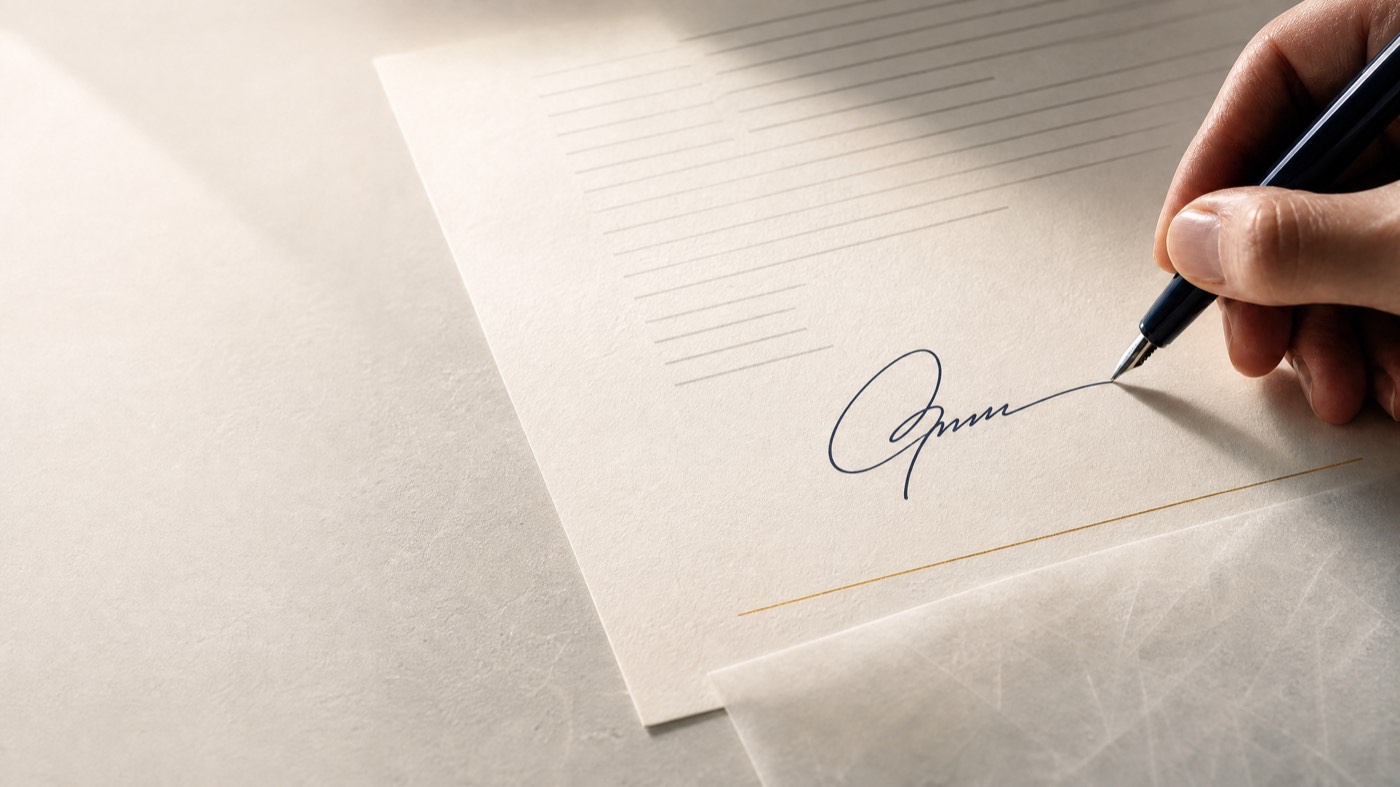
People have been reading meaning into signatures for a long time.
A large first letter is said to mean confidence. An underline is said to signal ambition. A difficult-to-read name is said to hide a secret. The stories are tidy, memorable, and easy to pass along. They are also far more certain than the evidence allows.
A signature can feel deeply personal. It appears in moments of authorship, agreement, presentation, and everyday introduction. It is made by hand, often quickly, and tends to stay with us for years. It is understandable that we want it to tell us something about the person behind it.
But there is a more useful way to think about signature psychology: not as a tool for decoding people, but as a chance to consider self-expression, intention, and the small rituals of authorship.
Why the mythology is so appealing
Graphology is the practice of trying to infer personality traits from handwriting. Its appeal is easy to understand. Handwriting looks individual. It contains variation. It seems to carry traces of habit, mood, speed, and style. That makes it tempting to treat every loop and line as evidence of a hidden trait.
The problem is that a good story is not the same as a reliable method. A study indexed in PubMed compared graphologists’ assessments with Big Five personality questionnaire measures across two studies. The authors reported that the results did not validate graphology as a measure of personality, that interrater reliability was very low, and that the second study found no evidence to validate the method as a personality measure.[1]
That does not make signatures meaningless. It simply means we should not turn them into verdicts.
The fact that a signature feels personal does not make it a diagnostic tool.
A person may sign differently on a hurried delivery receipt, a formal agreement, a birthday card, or a favorite piece of work. Their writing can change with the pen, the surface, their energy level, injury, time pressure, and the space available. Even the signature they use most often may be something they invented as a teenager and never reconsidered.
A line cannot carry the full weight of a person’s character.
What graphology cannot tell you
It cannot reliably tell you whether you are confident, honest, ambitious, kind, introverted, creative, guarded, successful, or compatible with someone else. It cannot explain why you made a professional decision or predict how you will behave at work. It cannot tell a client whether you will keep a promise.
This is worth stating plainly because the internet is full of signature content that makes these claims with a friendly tone and a false sense of precision.
| A popular claim | A more honest view |
|---|---|
| “A large signature proves high confidence.” | Size can vary with context, habit, and available space. It is not a reliable personality measure. |
| “An underline means ambition.” | An underline may be a learned visual habit or a deliberate finish. It does not diagnose motivation. |
| “Illegibility means secrecy.” | Many fast signatures are abbreviated because they are designed for speed, not because the writer is hiding something. |
| “A slant reveals emotional openness.” | Slant can be affected by writing position, surface, and habit. It is not a stable measure of emotional life. |
The alternative is not to strip a signature of all meaning. It is to put meaning where it belongs: in the choices a person makes and the context in which they use the mark.
What is psychologically interesting about signing
Signing your name is a small act of self-reference. You are not merely making a mark; you are representing yourself in a form that other people recognize as yours.
Research in consumer behavior has described signing as a general self-identity prime. In other words, the act of signing can make aspects of self-identity more salient in a particular context.[2] That is an interesting finding, but it needs to be used carefully. It does not show that the shape of a signature reveals personality. It suggests that the act of signing can be psychologically meaningful because it calls the self into the moment.
That idea rings true in ordinary life. A signature can make a document feel more final. It can turn an ordinary note into a personal one. It can make a presentation cover feel authored rather than anonymous. It can be a small ritual at the end of a piece of work: this came from me; I stand behind it; it now leaves my hands.
Those moments are about meaning, not measurement.
From decoding to designing
The most helpful signature question is not, “What does my signature reveal about me?” It is, “What do I want my name to communicate where it appears?”
That question gives you agency. It turns the signature from an object someone else can interpret into a gesture you can shape with purpose.
You might want your name to feel clear because you work in a context where people need to recognize it quickly. You might want a warmer, more natural rhythm because your work is built on relationships. You might want a distinctive finish because your portfolio is visual and authorship matters. Or you might want a quieter, classic gesture that feels dependable across many kinds of work.
These are not personality types. They are design preferences.
| Ask yourself | What it helps you decide |
|---|---|
| Where will this mark appear most often? | Whether clarity, compactness, or visual presence should lead. |
| What should someone feel in the half-second after they see it? | Whether you need warmth, restraint, confidence, or a more expressive touch. |
| Can I make it comfortably when the moment is not staged? | Whether the line has a rhythm that belongs to your real hand. |
A designer may use these questions to choose the right typeface for a brand. A person can use them to choose the right energy for a signature. In both cases, the point is not to invent a new self. It is to give the existing self a form that works in context.
The confidence to choose, not to perform
There is a quiet relief in stepping away from signature myths. You no longer need to worry that a certain loop makes you look insecure or that a simple line is not impressive enough. You can choose a mark because it feels like you, because it works on the page, and because you can repeat it without turning every signature into a performance.
That is a better standard.
A personal signature does not need to be grand. It does not need to be illegible to feel elegant, and it does not need to be ornate to feel distinctive. It only needs a recognizable structure, a natural rhythm, and a level of effort you can live with.
Less decoding, more self-authorship
The best reason to care about your signature is not that it contains a hidden message. It is that it can become a small, visible choice you have made with intention.
A signature can support the way you want to show up. It can add a little coherence to the work you send out into the world. It can be practical, expressive, quiet, memorable, or all of those in balance.
What it cannot do is tell the whole story of who you are. Fortunately, it does not have to.
Continue reading: Your Signature Is Part of Your Personal Brand—But It Is Not Your Whole Brand and How to Design a Signature You Can Actually Repeat.